
Outside the Spotlight: Draft Gems of the AL East
The best isn’t always first! My favorite AL East draftees to watch out for.

First Pitch:
This year’s installment of the MLB First Year Player Draft had no lack of excitement. For most fans though, sitting through TWENTY rounds (and 3 Days) of draft selections can be nauseating. If you didn’t, I don’t blame you! The later rounds are the ones that really make the difference, so here are some names to know from the fifth round and beyond.
Baltimore Orioles: LHP Holden deJong (11th Round)
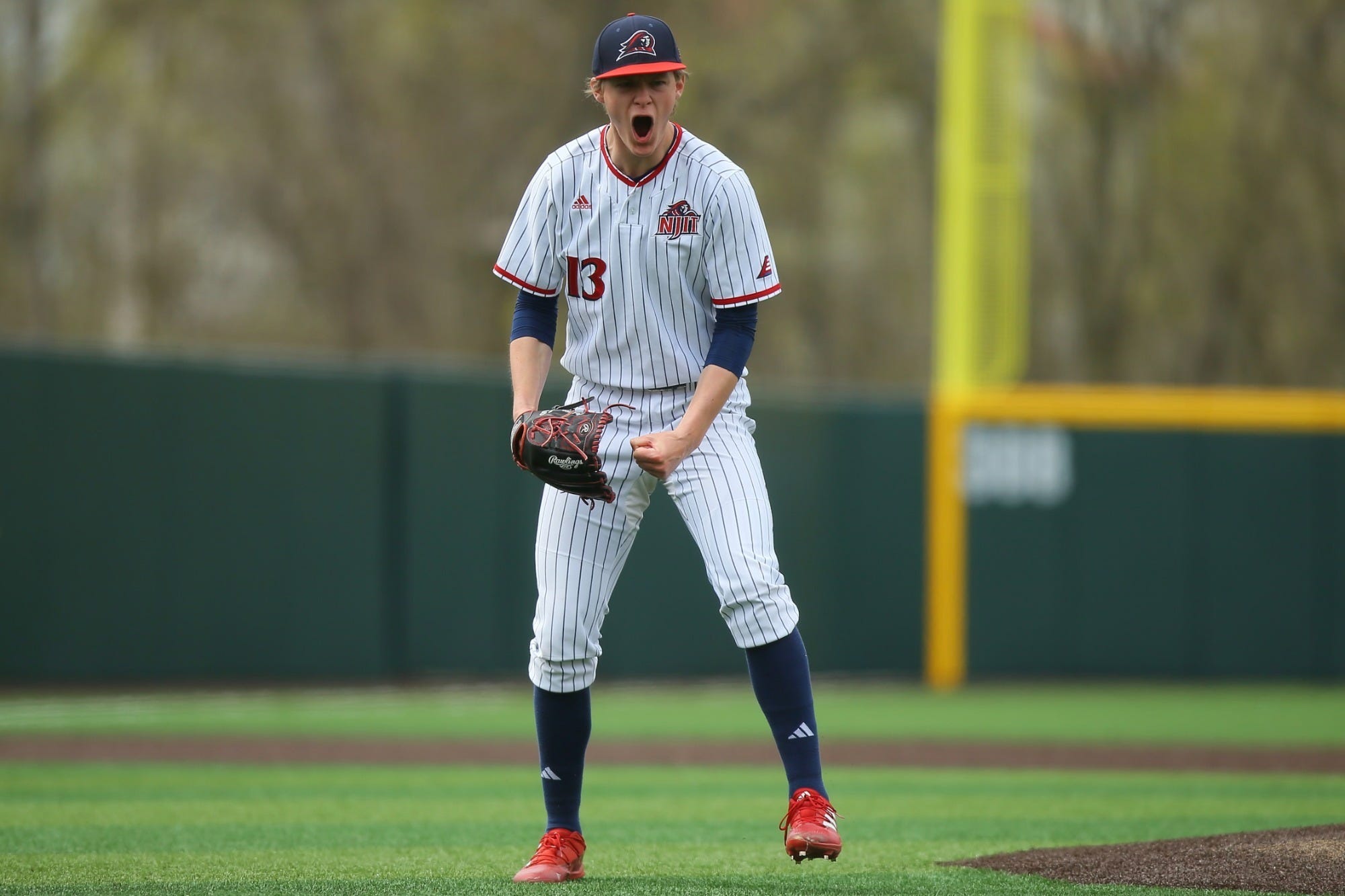
With four first round picks at their disposal the Orioles had unprecedented firepower in terms of money and draft capital at their disposal. In the past when I’ve evaluated the Orioles drafts, I feel like I only really look at the position players, because finding and developing hitting talent is something they have excelled at under GM Mike Elias. By comparison, the Orioles have had real issues finding and developing pitchers through the draft. Many of the Orioles prominent homegrown arms come from before the Elias era, but this might be a problem created by not taking bigger swings on pitching talent—in the previous five drafts combined, the O’s selected and signed only two pitchers in the third round or higher. So, while I do have concerns about the future of their pitching development, I see this as more of a talent and discovery issue rather than a process one. This year, it feels like Elias might’ve shifted his philosophy slightly, taking Joseph Dzierwa in the 2nd round and JT Quinn in the second comp round. In this class, Baltimore clearly favored big-bodied arms, with all thirteen of their pitching selections standing 6’0” or taller, including six at 6’4” or above. My pick for Baltimore, 11th Rounder Holden deJong, falls into that group of six.
The NJIT product flashed huge upside in limited action this spring before an injury cut his season short. deJong is still relatively lean for his size, and even though he did add weight going into the spring, there’s still more room to grow physically. His fastball currently tops out at 95, but there’s reason to believe he could get even more life out of it as he continues to fill out his frame. In addition to his 4-seam, deJong also throws a slider that tunnels well with his fastball. He also features a mid 80s changeup which scouts believe is a serviceable weapon. Evaluators trust deJong’s stuff as he has shown over three years that missing bats is not an issue for him. His main weakness is command, but he showed improvements to his strikeout and walk rates this past season (which isn’t a new development) deJong has steadily improved in this area throughout his three seasons at NJIT.
📹Video Credit: Twitter/X @brian_recca | Substack Brian Recca
With proper guidance, deJong has the potential to transform into a premium arm. For the Orioles, the priority should be cleaning up his mechanics—particularly the inconsistencies in his delivery and follow through—while reinforcing his progress in throwing more strikes. If all goes according to plan on the development side of things, deJong has a strong frame as well as good swing and miss foundation which gives him enormous upside for an 11th rounder.
Boston Red Sox: LHP Myles Patton (7th Round)
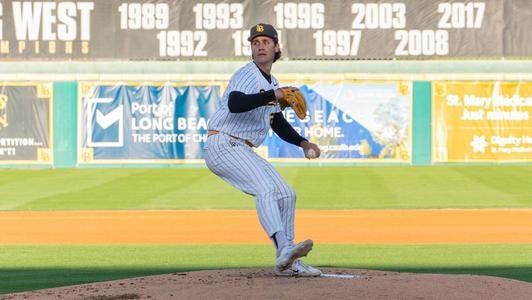
The Red Sox had a really impressive draft, especially with the pitching they took. Patton is one name that Sox fans should keep an eye out for when he debuts next season. Boston’s 7th rounder boasts excellent extension that allows his fastball to play well above its low 90s velocity. Given the size, it is likely that Patton could grow into more velocity under pro instruction. After his fastball, Patton’s best pitch is his low 80s bullet slider. It gets a healthy amount of whiffs and provides a solid strikeout option for Patton. Alongside those two pitches, is his cutter which adds significant depth to Patton’s arsenal. According to some scouts, Patton’s changeup and curveball should be ditched entirely due to poor shape and command of them. Though I do think if he is able to develop a better feel for throwing it, his changeup could be a decent offering to righties in the future.
📹Video Credit: Twitter/X @California_PG
Boston’s CBO Craig Breslow has a clear affinity for pitchers with good fastball metrics, as the club has started to chase this particular pitch archetype a lot recently. Lefties with above average extension comprise a lot of Boston’s most successful arms with ace Garrett Crochet, top pitching prospect Payton Tolle and closer Aroldis Chapman all having an extension of 6.8 feet or larger—here’s a great article explaining why this matters. Patton isn’t even the only player in this draft class that shares this characteristic, with 8th Rounder Dylan Brown also falling into this category. Brown is my runner-up here, so watch him closely as well.
Patton is characterized by many scouts as a strike-thrower and a pitchability southpaw, but the underlying stuff and projection suggest he might have an even higher ceiling than those terms usually imply. Boston’s pitching development will need to focus on improving Patton’s velocity and secondaries if he is to turn into a legitimate starter prospect. Justin Willard and company have done an exceptional job adding and refining secondary offerings for their development projects, giving me confidence they can do the same with Patton. His overall size likely limits how much physical growth is left, but that’s okay, because as a seventh rounder, no one is expecting him to become an ace. Still, for my taste, strike-throwers with polish and some projection, like Patton, are exactly the type of arms worth betting on late.
New York Yankees: 1B Kyle West (13th Round)
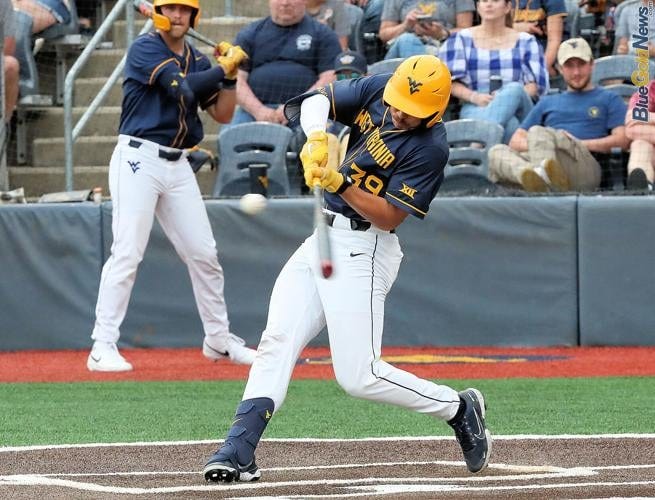
With their hands tied in terms of Draft Pool, due to spending in the offseason, the Yankees were hamstrung across their 2025 draft class. Very similarly to how they dealt with this very situation in 2023, the Yankees gave an overslot deal to a premium HS shortstop, leaving even less money for later rounds. Though there’s a lot of unknowns in the class because of this, there are a few players that stood out to me. WVU’s Kyle West fits the trend of the Yankees taking bats with excellent batted ball metrics. Anytime a prospect boasts a MaxEV over 115 MPH, my ears perk up. West is just the second corner infielder the Yankees have taken in the last three draft classes, but given the organization’s long-standing emphasis on raw power, it’s easy to see why West caught their attention.
In 11 games at Low-A Tampa, West has slashed a less than stellar .250/325/.306 with a K rate of 35% and a BB rate of 7.5%. I expect West to improve his numbers as he sees more pro pitching. Some positives are his excellent exit velocity and hard-hit numbers. West’s EV, 50% EV, 90% EV and HardHit% all rank in the 96th Percentile or better. If he can adapt to the difficulty level in Pro-Ball his 63.6% HardHit% will certainly play. Additionally, his SwStr% and Contact% indicate that he isn’t completely overwhelmed by pro pitching. So, with a strong quality of contact profile, why don’t West’s surface stats match? The answer to that question is most likely due to his 55% groundball rate as well as his abysmal K and walk rates. With a BB/K Rate of 0.21, West will need to make better swing decisions if he is to succeed at this level (and the next). At WVU, West made great improvements to these areas, pulling down a 29% K rate in his junior season to a 17.4% K rate in his draft year. Clearly, pro pitching is harder to adapt to, but West has shown an aptitude to make necessary adjustments.
📹Video Credit: Twitter/X @BlueGoldNews
Mechanically, it’s a very rhythmic left-handed swing for West. He makes a lot of pull-side contact, due in large part to his great bat speed. He’s made great strides in quieting down his hands and staying more balanced in his back swing, though his swing still gets long and it might get him in trouble as he moves through the minors. He has big-league size, but scarily he might have even more room on his frame to pack on muscle. As a 13th-rounder, West has plenty to prove, but the Yankees’ recent success with late-round and UDFA hitters like Ben Rice, Rafael Flores, Dylan Jasso, and 2024 picks Brendan Jones and Dillon Lewis breeds optimism for the idea that he’s in the right place to do so.
Tampa Bay Rays: OF James Quinn-Irons (5th Round)
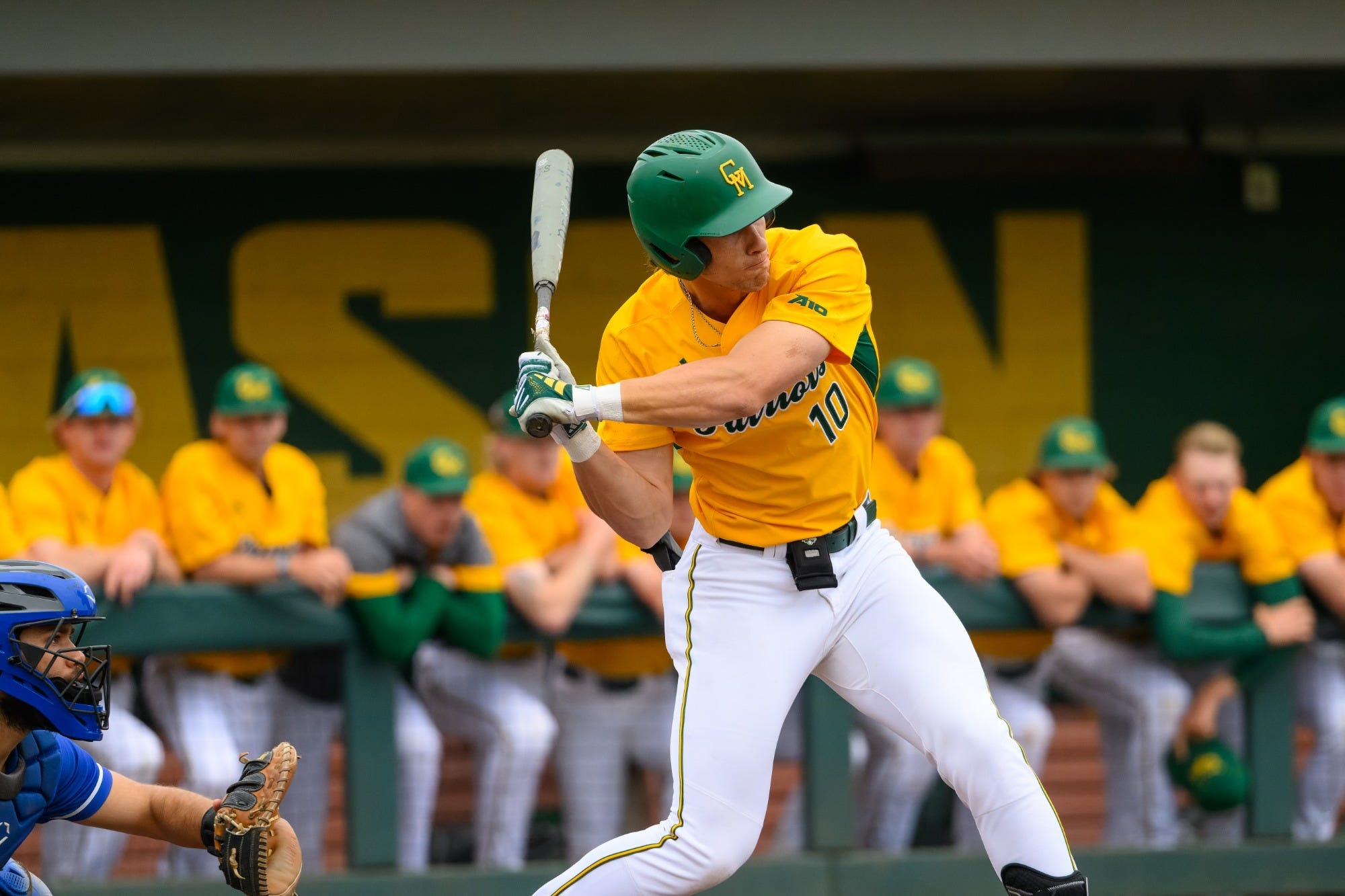
The always savvy Rays were up to their usual tricks this draft, navigating a deep class wisely. Tampa made some of my favorite picks in Day 1, grabbing prep hitters Cooper Flemming and Taitn Gray in the second and third rounds respectively. They followed it up in Day 2 with one of my favorite college bats in the entire 2025 draft class with James Quinn-Irons (from this point on to be referred to as JQI).
The righty outfielder had a monstrous junior season at George Mason boasting one of the gaudiest offensive stat lines in all of Division I College Baseball. With a wRC+ eclipsing 180, a SLG% over .700 and EVs well above 110mph, JQI has special results and metrics. Along with his excellent power, JQI poses a serious threat on the basepaths showing himself to be a well above average runner and savvy baserunner. JQI is also a premium athlete and good fielder who is likely to remain in center for the foreseeable future. According to scouts, one hole in his game is his pitch recognition skills as he has really struggled against spin in the past. Encouragingly, this season he made more contact than ever, producing an In-Zone Contact% (IZ-Con%) of 92.3%, while raising his IZ-Con% against breaking pitches by around 10%. This should be a major point of emphasis in his development, as he is going to need to continue identifying spin, especially as he moves through the minor leagues. Scouts also question the level of competition JQI faced at GMU, noting that he did not consistently face top-tier opponents. A lot of his success is going to hinge on his ability to adapt as he makes the jump to pro-ball.
📹Video Credit: Twitter/X @JoeDoyleMiLB
Mechanically, JQI has a very physical swing with extraordinarily quiet hands and a well-balanced lower half. At times it looks like he’s swinging a toothpick with just how strong he is. Improving his route running will also be crucial if he’s to stay in center, but with the Rays’ proven ability to develop defense, this isn’t a major concern of mine. Overall, JQI’s mix of raw talent and recent improvements allows me to lean into the fact that he could be one of the most explosive position players in the entire draft class when it’s all said and done.
Toronto Blue Jays: RHP Karson Ligon (9th Round)
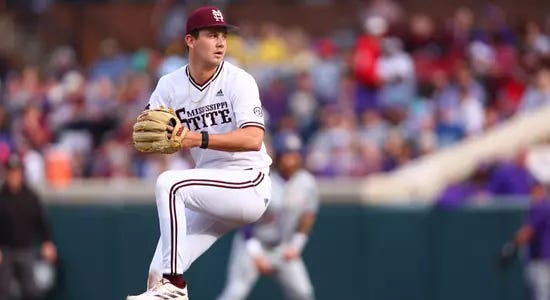
There’s a lot to like about this Blue Jays draft class from top to bottom. The obvious highlights for me are Jared Spencer (11th round) and seven-figure bonus signee Blaine Bullard (12th round), but it was their ninth-round senior-sign, Karson Ligon, who really caught my eye. The Mississippi State right-hander brings an electrifying presence and incredible strikeout stuff to boot: an upper-90s fastball, a deceptive changeup, and a sharp slider that helped him post a K/9 over 11 this past season.
📹Video Credit: Twitter/X @PGCollegeBall
The main concern with Ligon has always been his control. While he improved his walk rate from a troubling 8.0 BB/9 as a junior to 4.6 this past season, he still struggles at times to consistently locate in the zone. That inconsistency will ultimately determine his future role. Right now, Ligon is likely to be developed as a starter, but if the command issues linger, a move to the bullpen could be in the cards.
Toronto’s recent pitching development direction gives more reason for hope with Ligon. New pitching director Justin Lehr has introduced a new development strategy emphasizing strike-throwing and count control, a philosophy he calls “Owning the Zone.” Lehr was hired away from the Giants in 2024 and his leadership has already paid dividends, with 2024 draftees Trey Yesavage and Johnny King (among others) making strong early impressions. With that framework in place, it’s easy to dream of what Ligon could become if he learns to harness his arsenal and consistently attack the strike zone.
Bottom of the Ninth:
There was so much talent to sift through for this division alone, I tried my best to highlight my favorites. Obviously, some will inevitably just get lost in the shuffle. If this was a list of every draftee I liked from the AL East, it would become an article that you probably don’t want to read, and that I would never finish. As for when to expect the next divisions, I want to say they will come soon, but I also don’t want to make any promises. Still keep your eye out for them if you did enjoy this one. Lastly, I want to give a huge thanks directly to MLB Pipeline, Prospects Live, Prospects Worldwide, Prospect Savant, Perfect Game (among others), and you for reading 😊!